Rewriting history: Why we chose the DINK life
⚠️ Content Warning:
This article discusses personal experiences with family conflict, emotional challenges, and complex relationships. Some readers may find certain details sensitive or triggering. Please proceed with care.
"DINK," short for Dual Income, No Kids, sparks all kinds of reactions.
Some people think it’s a modern, freeing choice. Others see it as selfish or even strange.
In traditional Asian culture, having children has always been the norm.
Almost an expectation.
In the past, families would have five, ten, or even more children, and this mindset still lingers today. It shows up every Lunar New Year, when relatives start their endless rounds of questions.
If you’re single, they’ll ask, "When are you getting a girlfriend?"
If you’re married, it’s, "When are you having kids?"
If you already have kids, they move on to, "When’s the next one coming?"
There’s no escape. It’s like a checklist, and no matter where you are in life, there’s always another box to tick.
For my wife and I, this decision challenges those traditional expectations. It doesn’t mean we’re rejecting our culture, but it does mean we’re choosing what feels right for us rather than following what’s been handed down.
Our journey to this decision is shaped by personal experiences and lessons that made us who we are today. This choice feels right for us, even if it doesn’t follow the expectations many people have.
In fact, more people today are beginning to question the traditional script of life.
If you’ve ever felt unsure about whether you truly want what’s expected of you, you’re not alone. This story might resonate with you as a reminder that there are different ways to live a meaningful life.
This isn’t just another story timed for Chinese New Year attention. It’s something deeply personal I’ve chosen to share.
Writing this just one day before Chinese New Year isn't easy too.
Chinese New Year is traditionally a time for families to come together, to celebrate, reconnect, and share meals. It’s a season filled with warmth and togetherness, at least on the surface.
But for me, it’s also a time that brings up complicated emotions and memories, making it all the more challenging to reflect on and share my story.
I’ve hesitated to share this story. I wrote and edited this post several times, wondering if it’s worth opening up old wounds or revealing parts of myself that I’m not proud of (I really didn’t like who I was when I was younger).
In the end, I decided that I should share it, just to show that change is possible, and that it’s okay to question the life you were told you had to live. A large part of my life was shaped by fear, insecurity, and trying to meet expectations that didn’t align with who I really was.
I hope that by sharing my story, anyone going through something similar can find their own path to freedom and healing.
(Obviously, I'm not sharing every detail in this post. I'll only share enough to establish context.)
My childhood: A battleground instead of a playground
Childhood is often seen as a time of exploration and freedom, but mine was anything but. I don't remember much other than that it felt like a series of rules and expectations I had no say in.
My parents were strict, controlling every aspect of my life. What I wore, how I spent my time, who I spent my time with, and even the hobbies I could pursue. There wasn’t much room to figure out who I was or what I wanted.
While other kids were learning how to ride bikes, swim or take music lessons, I was buried in tuition classes and endless assessment books. I was a weak kid, I hardly did any sports because I never owned any badminton/ table tennis rackets, or basketballs.
Growing up in an Asian household, where academic success was everything, I felt like my worth was tied to my grades. Doing well earned love and approval, but anything less brought punishment and more tuition. It was a relentless cycle that left little space for joy or curiosity.
Only when I went to a friend's home, did I discover gaming. He had a Sega console which I was extremely envious of. I was only 8 then.
When I reached 14 years old, playing games officially became my escape. I had my exams coming up and the deal my parents offered, was that I could get a PlayStation 2 if I'd not only done well, but also put myself through into the best class for the next year.
They thought I couldn't do it. But I did it.
The best class was a pure science class, where we learnt pure Physics and Chemistry.
I eventually got C6 for Chemistry. Never was good at it. lol. My Physics was A1.
But guess what? It doesn't matter today.
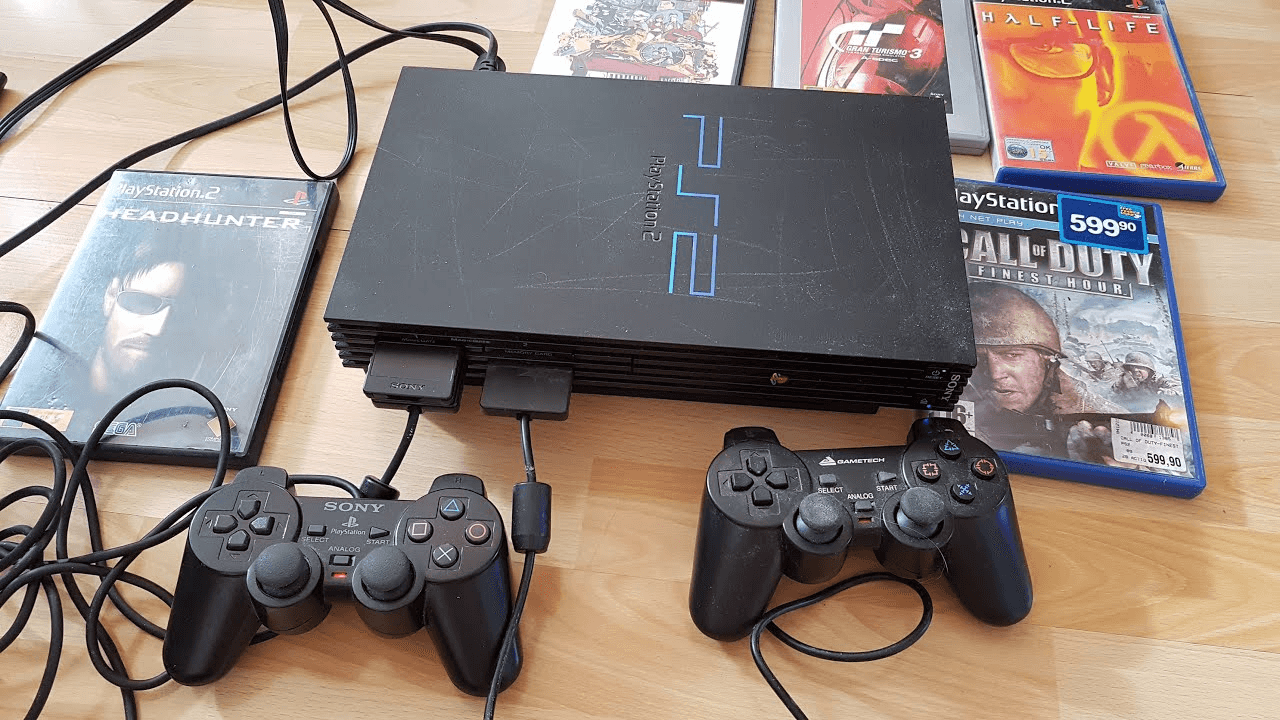
Another reason why I love gaming was because it was the one thing I could do in the privacy of my room, headphones on, pretending to study.
Those fleeting moments of freedom gave me something to hold onto, even when life outside my room felt tense and unpredictable.
When I got older, gaming took a backseat (sadly), and my time was spent on academics. The time I spent at home was reserved for studying, completing assignments and whatnot.
Because home was rarely a place of comfort, I coped by staying out late, studying long hours in school to avoid being home, timing my day so I could leave before everyone woke up and return when they were asleep.
Looking back, I wonder how many others have felt the weight of expectations like I did, unable to find their voice amidst the noise of what they were “supposed” to be.
Were you one of them?
Those years shaped me in many ways, teaching me what I don’t want for myself or anyone I care about. More than anything, they fueled my determination to live differently, to create a life defined by freedom and intention rather than guilt and obligation.
Growing up in a storm
My parents’ relationship was "complicated". They had unresolved issues that lingered for years (until this very day), creating an atmosphere that was hard to live in. I won't be sharing too much details here, out of the respect that I still have left for them.
There were moments when it felt like home wasn’t a place of comfort but a source of stress.
For me and my two sisters, it meant growing up in a household where tension and conflict were part of the daily routine.
Daily dinners, in particular, were often traumatising. It was akin to walking on eggshells, or skating on thin ice, or what I like to describe crassly as "using a 1-ply toilet paper to wipe yourself".
Those weren’t a time to connect as a family. They were filled with interrogations about work or school, or worse, comparisons to others.
“Why can’t you be more like so-and-so?” became a phrase I heard far too often.
Mocking others behind their backs, including friends and family we personally knew, became a normal part of conversations. Over time, this filled me with shame to the point where I struggled to face those people in real life. I became extremely cautious about who I chose to share with my parents.
Essentially, dinner was a time to brace yourself for criticism or complaints, not a moment of peace or bonding. I can't even remember the number of times I was called "stupid", or "useless". At one point, their love was even weaponised against me. I was threatened that they would stop loving me.
Any child would be traumatised hearing that from their parent, an adult they trusted and depended on for their survival and emotional needs.
For every single incident, I remember every detail vividly, but to them, it’s likely forgotten. That’s often how it goes, what felt significant to me was probably too trivial for them to even recall.
I learned later on to keep my mouth shut during meals, except for when food was entering.
This, amongst other more traumatising events, continued on for decades (what I'm sharing here is just the tip of the iceberg, sadly).
I spent much of my time trying to escape that environment. Whether it was staying late at work or shutting myself in my room with my headphones on, I somehow found ways to avoid the chaos.
The silver lining was that I was focused on my studies instead, which was a good thing, I guess?
By the time I reached university, I had already endured two of the most defining traumatic events in a long series of hardships that fractured my family.
In hindsight, my parents should have separated then and there. These events were the kind that would have caused any normal marriage or couple to split up—there was no other way.
But instead of parting ways, their stubbornness and selfishness kept them together, prolonging the pain for everyone involved. That decision marked a turning point for everyone, one that changed everything. Permanently.
Deep down, something shifted in me.
I started studying harder than ever, determined to break the cycle I had been trapped in for so long. Maybe I was still chasing my parents’ validation, wishing for the love I didn’t always feel. I’ll never know for sure.
What I do know is that I believed working hard and landing a "good job" would be my ticket out. Even if I couldn't find a partner, I'd still buy a home myself and live alone.
I was still brainwashed by societal expectations back then, but it gave me a plan, a way to leave the life I hated behind.
As I got older, I started to see things more clearly. I finally accepted that my parents’ problems were their own to solve. But, for a long time, I carried the weight of their conflicts, and the damage was already done.
I had even ended relationships of my own because the instability in my family deeply affected my mental health. I wasn’t in a place where I could maintain healthy connections, no matter how much I wanted to.
It took years for me to realise that I wasn’t responsible for fixing their issues or holding everything together. Looking back, I can’t help but wonder if things might have been better had they chosen to separate earlier. Perhaps we all could have found the peace we were searching for?
Today, I’ve set boundaries, recognising that I am not just a son, I am also a husband and a brother. There are people who depend on me. I’ve taken on a supportive role for my sisters, striving to set a positive example for them.
Sadly, I’ve made the difficult decision to distance myself from my parents.
The traumatic events continue till today, but I'm numb to them. Certain boundaries were crossed long ago—boundaries that no family should ever have to endure.
Those events broke any chance of rebuilding trust or finding resolution. At this point, stepping away feels like the only way to protect my own happiness and the well-being of those I care about.
Today, I have a close relationship with my sisters and their husbands. We meet up often, without including my parents. As for the times we do come together as a whole family (e.g. larger events that include relatives), it's just an attempt to create an illusion of a normal family, not for ourselves but for relatives who’re watching.
I'm not sure if you ever felt like you were carrying more than your share of the burden, like you were expected to solve problems that weren’t yours to begin with.
If so, I hope you know this: it’s not your responsibility to fix everything.
Sometimes, stepping away is the best way to find peace, for yourself and for others.
(Phew, it was tough writing all that. Alright, let's carry on!)
The turning point: Freedom through love
Meeting my wife was the moment everything began to change.
We met while I was in university, during a time when I was determined to break free from the life I had been trapped in. Maybe it was a sign from the universe. Her presence felt like the start of something new.
She wasn’t just someone I fell in love with; she became the person who helped me find my way.
As we started living together, I realised something startling: the life I had grown up with was far from normal.
Without even knowing it, I had carried so many habits and behaviours from my old life into our new life together.
I was rigid, overly self-critical, and constantly trying to anticipate problems, as if I couldn’t let my guard down. My wife noticed it right away and gently pointed it out.
It was a wake-up call I didn’t know I needed.
Slowly, I began to unlearn those patterns. It wasn’t easy to admit how much of my past I had internalised, but with her support, I started to see that I didn’t have to live that way anymore.
When I finally moved out at 30, it felt like I could breathe for the first time.
For the first time, I had the space to figure out who I really was and what I wanted. My wife understood me in a way no one else ever had. She never judged me for my struggles or tried to change me. Instead, she supported me as I worked through them.
Together, we started building a life that felt like our own. A life where peace, understanding, and freedom were at the foundation, not guilt or endless obligations.
Deciding not to have kids was one of the first big decisions we made together. She wasn’t keen on having kids either, which made it easier for us to envision a future focused on healing, growth, and truly living.
Looking back, I often wonder what my life would have been like if I hadn’t met her. She saved me from a path I didn’t want to walk and showed me that it was possible to live differently.
For anyone who feels stuck in patterns they can’t break, I hope this reminds you: the right people in your life can make all the difference.
Choosing no kids: Why?
The decision to not have kids wasn’t something I planned or consciously thought about growing up.
For my wife and I, it was a choice we came to naturally, shaped by our experiences and the kind of life we wanted to build together.
Looking back, there are parts of my childhood I wouldn’t want to relive or pass on, even though I didn’t think about it in those terms at the time. What I did know was that I wanted my life to be calmer, freer, and entirely my own.
For decades, I felt like I was living for someone else. Whether it was my parents’ rules or society’s unspoken benchmarks, I was constantly trying to meet expectations that didn’t reflect who I was.
When I finally broke away, I realised just how much time I had spent on someone else’s terms. Now, I feel an urgency to reclaim that time. I’m 37, but when I subtract the 20 years of emotional limbo, I feel like I’m starting over at 17. And this time, I want to live differently.
Time is limited, and I want to spend what I have left doing what feels meaningful to me and not rushing to meet expectations that don’t align with the life I want.
The pressure to have kids or to follow the same life trajectory everyone expects feels like yet another cycle I don’t want to fall into.
Also, kids require an incredible amount of time, energy, and emotional commitment.
While I deeply respect those who dedicate themselves to that, I know I’m not in a place to give that fully.
The truth is, I want to live the life I wasn’t able to before.
My wife feels the same. She has her own dreams, and together, we’re building a life that centers on growth, healing, and freedom. We’re not bound by societal expectations, and that has allowed us to focus on what truly matters to us.
Some people might call it selfish, but I see it differently. Choosing not to have kids allows us to focus on ourselves, giving ourselves the care and attention we never received growing up.
These days, people joke that plants are the new pets, pets are the new kids… and kids?
Maybe they’re the new extreme sports, reserved for the few brave enough to take them on.
Bernard, our dog who has become an important part of our family, is more than enough for us right now.

While he’s not a child, he gives us the chance to share our love with another living being. In a way, he’s helped us discover what it means to care deeply, while still allowing us the freedom to live the life we’ve chosen.
This choice isn’t about rejecting tradition or running from responsibility. Life is precious, and time is finite, it's important to live an authentic life, one that you own.
Redefining retirement: Living for today, not just tomorrow
If you grew up in the same era as me, the idea of working hard for 40 years and then enjoying retirement was sold to us as the dream.
But for our generation, that dream feels less and less realistic.
The world has changed.
Job security is no longer guaranteed, the cost of living keeps rising, and burnout has become a normal part of life.
Waiting until you’re 65 to start living? That doesn’t make sense anymore, especially when many people don’t even make it that far in good health.
When I first graduated from school and entered the workforce, earning money seems to be the ultimate goal. However, as the years passed, I’ve come to see time as more valuable than money.

You can always find ways to earn more money, but once time is gone, it’s gone. That’s why I’ve chosen to prioritise living now instead of deferring it to some far-off future.
I believe in hard work, but I also question the idea that life should only start after decades of sacrifice.
I don’t want to be the person who works endlessly, only to look back someday and wonder where all the time went. I’ve already lost so much of it to circumstances I couldn’t control.
Now, I want to focus on exploring, learning, and experiencing life in a way that feels authentic to me. Whether it’s traveling to places I’ve always dreamed of, taking moments to slow down and enjoy the present, or simply spending quiet days with my wife and Bernard, I want to fill my life with memories I’ll cherish, not regrets.
I'm not sure which generation you're from, but i'm sure the word "balance" gets thrown around a lot.
But when you break it down, having only a few hours to yourself after work, working five days just to rest for two, and spending 40 prime years hustling in exchange for enjoyment in old age, does that really feel like balance?
True balance is when both sides of the scale are equal, not when one side is always outweighing the other.
The notion of working ourselves to exhaustion in the hope of a perfect retirement decades down the line feels outdated.
Whatever our parents told us, it worked for them but it might not necessarily work for us. Using an old map in a new world is dangerous.
To me, finding ways to live meaningfully today while still being mindful of the future, that is the real definition of balance.
Facing criticism
Whenever you make a decision that goes against the grain, people will have opinions. Choosing not to have kids has brought its fair share of criticism.
Many think it’s selfish or accuse us of avoiding responsibility. Others assume we’ll regret it later, as if they know what’s best for us. And during family gatherings, there’s always the unspoken judgment when the inevitable question comes up: "When are you having kids?"
The way I see it, kids deserve parents who are fully present, emotionally stable, and ready to dedicate a huge part of their lives to them.
My wife and I have reflected on this deeply, and we know we’re not in a place to give that kind of energy while also building the life we envision for ourselves. We're being honest with ourselves and what we can realistically offer.
The assumption that we’ll regret this choice is one I hear often. But regret, in my view, comes from living a life that doesn’t align with who you are.
We’re choosing a path that aligns with our values and priorities, which gives us peace of mind.
We’re not trying to prove anything to anyone. Our focus is on building a life that feels right for us.
Criticism will always be there, especially when you choose a path that diverges from the usual script. But so will the freedom that comes from standing by your decisions.
Everyone’s journey is different, and for my wife and I, this is the one that allows us to live with intention and clarity.
Conclusion: A life well chosen
Choosing to live without kids is just one part of a much larger journey.
More and more people are questioning the idea that life has to follow a set script. Especially in Asia, or more specifically, Singapore.
Whether it’s about having kids, choosing a career, or redefining what success looks like, the truth is there’s no universal path to happiness. The most important thing is finding the courage to ask yourself:
What do I really want?
We can choose to pause, reflect, and decide what works for us. It might mean pursuing balance over burnout, prioritising time over money, or making unconventional choices that bring real happiness.
If there’s one thing I’ve learned, it’s that our time is too precious to spend living by someone else’s expectations. Whether your path involves kids, travel, career, or something entirely different, the most important thing is that it’s yours.
As I move forward from my layoff, I’m excited about the life my wife and I are building together: a life that’s rich with meaning, purpose, and love.
Yes, I'm scared. The path ahead is uncertain.
But it won't stop me.
I hope this resonates with anyone who has ever felt unsure about their own path or questioned the "normal" way of doing things. You’re not alone in wanting something different.
Whatever your path looks like, the best choice you can make is one that allows you to look back and say,
I truly lived.
