Not everyone wants to be a leader—and that’s okay

The Silent Struggles of the Workplace
When I posted about how not everyone wants to be a leader on Threads, I didn’t expect it to blow up. I thought it was just another rant about work culture—something I’d been sitting on for a while.
I gotta say, the response was overwhelming.
The comments came pouring in, and they hit me hard. People shared their stories of feeling burned out, overlooked, or stuck in a system that demands you hustle harder, sell yourself louder, and be more.
And if you’re not doing all that, you’re treated like a cog in the machine, like you don’t matter.
One comment stopped me in my tracks:
"Sometimes I feel like I’m just a piece of furniture—functional but invisible."
That hit me, because I’ve been there. Grinding away, doing all the work, but feeling like no one noticed because I wasn’t “playing the game.” And apparently, I’m not alone.
Another person said something I can’t stop thinking about:
"Hustle culture isn’t about productivity—it’s about ego. People pushing others to work harder just so they don’t feel empty themselves."
It’s exhausting.
To constantly feel like you’re not enough because you don’t want to climb the ladder. Wanting fair pay and stability shouldn’t feel like the wrong thing to aim for. Some of us just want to do good work, get paid fairly, and have enough energy left for the rest of our lives.
This is for the Tired Millennials. The ones who just want to survive the grind in one piece.
Now, let’s talk about why this system feels so broken and how we can stop letting it break us.
Strap in, this is going to be a deep one.
My Story: How I Crashed and Burned
I used to think going above and beyond was the only way to prove my worth.
For years, I was the person who always said yes.
I picked up extra projects, solved last-minute crises, and worked myself to the bone. Late nights, early mornings, 18-hour days—it didn’t matter.
I told myself it would pay off.
Let’s go back 7 years.
The Climb
I was part of the founding team at a FinTech startup in Singapore.
In those early years, we were in survival mode. We all wore multiple hats, and I thrived in the chaos. I loved solving problems and building something from the ground up.
But as the company grew, so did the demands.
When the pandemic hit, everything changed. Suddenly, it wasn’t just about building anymore—it was about scrambling to find new revenue streams, cutting costs, and doing whatever it took to keep the company afloat.
Many people left because it got tougher to earn that paycheck. Those of us who stayed had to take a 50% pay cut. I was one of them.
When the company was down to its last two months of runway, the founding team—the people who had been our guiding force—told us we were getting acquired by a bigger company.
We were ecstatic.
Our efforts over the years had been recognised, and the possibility of continuing the company’s vision felt real.
But the reality turned out to be the opposite.
Treading Water
The acquisition caused a rift between the parent company and ours. Slowly, the founding team—the ones who had led us through the chaos—began leaving.
Before I knew it, I was one of the two original founding engineers still working there.
If you’re in tech, you’d know what happened next.
Layoffs became the norm, especially after the pandemic. And when people left, the company had no intention of hiring replacements. The weight of it all fell onto the shoulders of those who remained.
I remember one project vividly: migrating a two-decade-old custom Drupal platform.
This platform wasn’t built by us.
It came from a small company we had acquired a few years earlier, along with all the messy, outdated products they had developed. There wasn’t even a proper handover, because by the time of the acquisition, not a single technical person was left on their team.
That bad handover, coupled with a wave of resignations and layoffs, left us with a major problem: nobody really understood how the Drupal platform worked.
Neither did we, the tech team.
We had no idea how to maintain it or fix the constant barrage of issues that kept popping up—issues that signaled the platform’s end was near. It was standing on its last legs, and we knew it.
We could’ve ignored the chaos, but that wasn’t an option. The editorial team relied on the platform daily, and every issue they faced interrupted our work. The disruptions were so frequent that we couldn’t focus on our core responsibilities.
Breaking Point
One day, the platform completely broke down.
Since it was seen as “a tech problem” and the platform was a critical part of the content team’s workflow, the blame immediately fell on us, the tech team. I couldn’t accept that their failures were being pinned on us.
So, I had no choice but to spend several sleepless nights trying to fix it.
By some stroke of luck, I managed to revive it to a temporary state. But there was only so much I could do.
There were just two of us left on the tech team, and we were stretched thin, managing the systems for two companies—the one we were hired for, and the one that came with this broken Drupal platform.
I knew this couldn’t go on.
If we wanted to keep our jobs—and our sanity—we had to fix this. So, despite being swamped with critical tasks, we went ahead and planned the migration project.
It was the only way to keep things from falling apart completely.
This migration project ended up growing into a monster of a task, with constant deadlines, shifting priorities, and no room for error.
Without a product manager (PM), the PM responsibilities fell to me, the tech lead. Knowing we were going to face serious challenges ahead, I requested additional resources—more headcount or extra time—but was met with rejection.
At the time, I led a small team of two: one artist and one engineer. That meant only the engineer could help tackle this monumental task. If we failed, all three of us risked losing our jobs.
To make matters worse, both of them had just become fathers.
It felt like my entire career—and my team’s livelihoods—was riding on this one project. I thought about quitting, but my co-workers couldn’t afford to lose their jobs.
Without any one of us, the team wouldn’t function; our roles were so interdependent that it was either we stayed together or we left together.
I had no choice but to push through, working 18-hour days for months, as my co-workers had fathering duties to fulfil. It was either that—or risk losing everything.
After six grueling months of swimming against the current, we barely pulled through.
I was exhausted.
I shouldered the brunt of the workload. Burnout wasn’t just a buzzword—it was my reality.
But I told myself, and my team, that we were the heroes of the company.
We had built a new publishing platform for the editorial team and saved the company over $300,000 by doing it all in-house. We even built a self-serve dashboard so they could perform administrative tasks without the help of the engineers in future.
It was a miracle outcome, delivered under the most stressful circumstances.
Feeling proud of our work, I requested a pay raise for my team to acknowledge their sacrifices—the late nights, the missed family time, and the incredible effort they had poured into helping the company through its toughest period.
We were denied.
Not only that, but we were publicly shamed. Management posted a message in the main Slack channel, saying:
"If you think you deserve a promotion, prove it by doing more than your job. What you’ve done so far doesn’t count."
It was a gut punch.
On top of the monstrous migration project, we had continued delivering new features for the company’s products.
By my estimates, the three of us were doing the work of ten people. I had even brought this to management’s attention. So to see their response—to be so dismissed—left us shell-shocked.
Before we had a chance to recover, the layoff came.
It wasn’t just me.
The entire tech team was let go. Then the editorial team was next.
We all received the same automated email early in the morning. Yes, we were laid off through an automated email.
In fact, this happened right after we had deployed a fresh reskin of our company website. It was another challenging project—separate from the migration—that we poured our energy into, hoping it might earn us some goodwill.
After all, our efforts on the migration project had gone completely unacknowledged. Maybe, just maybe, this project could make a small difference.
But it didn’t matter.
Those who were laid off immediately returned their staff passes and laptops.
Me? I was in such disbelief that I kept working until 6PM, which was the official knock off timing.
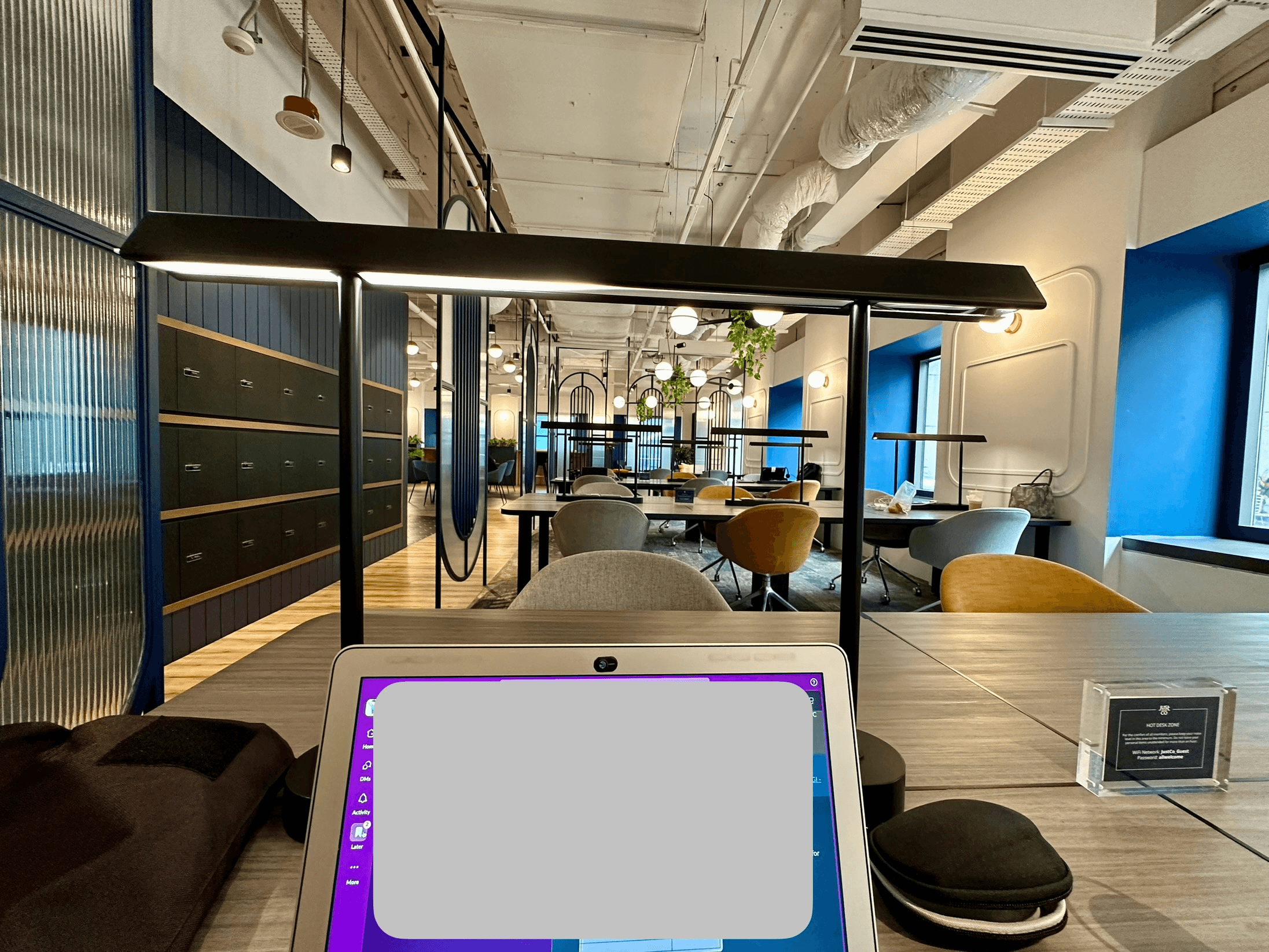
My mind was in such a state of anxiety and stress that I did the only thing I knew how to do: work.
I continued as if nothing had happened. I finished my tasks, updated the database, website, and application, and returned my laptop at 6 PM. It felt like just another workday—except it was my last.
I was the last person to leave that day. Nobody was around, I simply left my laptop in the designated room and went home, gutted.
Awake at Last
Looking back, that layoff was the wake-up call I didn’t know I needed. It forced me to confront some hard truths about hustle culture and how much I had sacrificed in the name of “proving myself.”
I had given so much of my time, energy, and health to a system that didn’t give back.
That experience taught me something I wish I had known earlier: Going above and beyond doesn’t guarantee anything. If you’re not careful, it just leaves you burnt out with nothing left to give—and it’s your family who sees what’s left of you, the scraps.
That’s not fair to them, or to yourself.
Modern Workplace Truths
As I continue to reflect on the overwhelming response to my post on Threads, another thing became clear: the struggles I faced are part of a much bigger picture.
Modern workplaces are designed to optimise everything—including the people within them.
Hustle culture, quiet hiring, and relentless cost-cutting aren’t just trends; they’re systemic. And they’re taking a toll on employees everywhere.
The Glorification of Hustle Culture
Hustle culture glorifies overwork.
It rewards those who constantly push themselves harder and punishes anyone who simply wants to do their job well.
But this pressure comes at a cost: burnout, imposter syndrome, and a creeping sense of inadequacy.
For many, it feels like no matter how much they contribute, they’re still invisible unless they’re “selling themselves.”
I heard from someone who described it like this:
"It feels like you have to work twice as hard just to be seen, and by the time you’re noticed, you’re already burnt out."
This constant need to hustle isn’t just about ambition anymore—it’s about survival in an unforgiving system.
Quiet Hiring: The Hidden Burden
Quiet Hiring is a term I didn’t fully grasp until recently, but it describes something I’ve experienced firsthand. It’s when employees are asked to take on more responsibilities without a title change, pay adjustment, or recognition.
This unspoken expectation has become the new normal, especially for senior employees.
One person shared how, at 52, they were suddenly expected to take on additional responsibilities without any conversation about their goals or career progression.
Quiet Hiring is also a direct consequence of layoffs.
When companies fail to hire replacements for those who have been let go, the workload doesn’t disappear—it gets spread among the remaining employees. And often, it’s not even work related to their role.
This creates a vicious cycle.
Employees struggle to juggle their original responsibilities with the added workload, often spending more time figuring out how to do jobs they weren’t trained for. Over time, their performance begins to suffer.
Burnout sets in, or worse, they’re labeled as underperforming because they’re stretched too thin. Eventually, this cycle leads to one of two outcomes:
They’re fired for failing to meet expectations, or
They resign because they can’t handle the workload and stress anymore.
At one point in time, loyalty and hard work were seen as virtues:
Employee A is loyal and hardworking. They should get the best assignments, be first for a promotion, and the strongest support from management.
But now, loyalty and hard work are often exploited:
Employee A is loyal and hardworking. They’re not going anywhere no matter what we do, so there’s no need to treat them decently.
Put simply: Quiet Hiring preys on loyalty.
It thrives on the assumption that people will stay and do more simply because they care about their team or the company. But in the eyes of the company, loyalty is often a one-way street that only leads directly to them.
Optimised Does Not Mean Balanced
We touched briefly on optimisation earlier.
Something interesting: The engineer in me sees everything as an optimisation problem. The food you eat? It’s been optimised so that all the flavours work together perfectly. The path you take to the park? Without realising it, you’ve optimised that too—choosing the shortest or easiest route.
But here’s the catch: food tasting good doesn’t mean it’s healthy. The shortest or easiest route isn’t always the safest.
At its core, the modern workplace is built to maximise efficiency. And this inevitable process often comes at the expense of the people doing the work.
Employees are expected to:
Take on more responsibilities.
Deliver faster results.
Meet ever-increasing expectations.
And all of this happens while compensation stays stagnant.
Companies will always test the limits of how much they can get away with.
As I shared in a previous post on Threads:
"The salary you’re getting now is the minimum you’ve accepted to do your job."
And that’s how a temporary balance is struck.
But soon enough, the relentless drive for optimisation kicks in again. Work piles up, and no matter how much effort you give, it never feels like enough.
You start complaining or feeling resentment toward work. That’s when you know the balance is off. You’ve been optimised—and you’re holding the shorter end of the stick.
In the end, the company always comes out ahead, while employees are left with less.
For some, it’s the constant demand to do more without recognition or promotion. If you accept that extra work, it means you’ve accepted the optimisation—even though it’s not balanced.
Simply put: You’re not paid enough to cover the work you’re doing.
If you’re brave enough to ask for recognition or a raise, the company might give you a little more to restore balance—but only temporarily.
And then? The cycle repeats. The balance is upset again, and the process starts all over.
The modern workplace has become a perfect storm of expectations:
Hustle harder.
Take on more.
Do it all with less.
For many of us, that storm feels impossible to escape.
But what if I told you there’s actually a way?
Read on.
Stability Over Hustle
For years, we’ve been told that ambition is everything. The idea is drilled into us: climb the ladder, strive to do more, chase the next promotion. Rinse and repeat.
But what if that’s not what we want?
What if success, for some of us, doesn’t look like leadership or constant growth?
Some people thrive in the chaos of ambition. They live for the grind, and that’s great—if it works for them. But for many of us, the relentless pressure to hustle leaves us burned out and disillusioned.
Did you know that when autonomy, mastery, and purpose are present, people are happier in their jobs?
Mastery often gets overlooked.
It’s the one aspect of work that you have full control over—your actions directly determine whether you get better or worse at your craft.
In other words, mastery is about you—not your employer. Autonomy and purpose, on the other hand, depend heavily on the workplace environment.
So, staying in a role because you’re good at it and because it brings you satisfaction shouldn’t be seen as “settling.”
Stability and expertise are just as valuable as ambition and leadership.
The problem is that the workplace doesn’t reward stability. It rewards visibility.
Those who hustle louder, even if they produce less, are often seen as the high performers. And they are the ones who get promoted.
That’s why so many of us feel undervalued—because we’re focused on doing the work, not selling it.
Yet, stability is what makes workplaces function. It’s the backbone of teams, projects, and businesses.
It’s time we stop treating it like a second-class goal.
Choosing stability over hustle isn’t laziness. It’s knowing your boundaries, valuing your expertise, and recognising that your worth isn’t tied to endless ambition.
Thriving in the System Without Losing Yourself
Here’s the hard truth: the system isn’t changing anytime soon.
Hustle culture, quiet hiring, and constant optimisation are too deeply embedded in modern workplaces.
But that doesn’t mean you have to lose yourself trying to keep up.
There are ways to navigate the system without burning out—and without sacrificing your boundaries or your sense of self.
1. Redefine what success really means for you
Not everyone wants to be a leader, and that’s okay.
Success doesn’t have to mean climbing the ladder or earning a fancy title. It can mean finding stability, mastering your craft, and setting boundaries that protect your well-being.
Reflect the kind of outcome you want in your life. For me, it's freedom to build my own projects, creative expression, authentic connections and a balanced life that lets me breathe.
What about you?
2. Speak up when the goalposts move
If responsibilities keep piling on without recognition or pay adjustment, it’s time to have a conversation.
Just think of it this way—you’re not actually saying no. You’re simply asking for clarity!
But let’s be real.
I know not everyone feels comfortable speaking up, and that’s okay. If voicing your concerns feels too risky or overwhelming, there’s still a way out.
I still remember the days I chose to stay silent because it wasn’t in my introverted character to tackle conflict head-on.
So this is what I did instead:
I started documenting everything. I kept a record of the additional responsibilities I had taken on, the outcomes I delivered, and how they contributed to the company’s goals. I even went to the extent of documenting my team’s impact.
That became my evidence—something I planned to use when the time felt right to advocate for myself or even explore opportunities elsewhere.
Sadly, I never got the chance to use it because I was laid off.
Looking back, though, the process taught me something valuable: sometimes the way forward isn’t through confrontation but through preparation.
Quietly gathering your wins and knowing your worth gives you leverage, whether it’s for a future conversation or your next role.
3. Focus on your mastery (not your visibility)
Mastery is yours to control.
It’s the one aspect of work that doesn’t rely on anyone else. Your employer can set your goals, your deadlines, and even your purpose, but how much you grow in your craft is entirely up to you.
I learned this the hard way.
During some of the most difficult periods in my career, I realised that I couldn’t always count on recognition or promotions to validate my work. What I could count on was myself—on the skills I honed, the problems I solved, and the expertise I built over time.
Take pride in honing your skills and becoming exceptional at what you do.
Although my experience during work wasn’t the best, it was about finding ways to improve, even in a high-stress environment. Whether it was refining my technical knowledge or figuring out how to lead a team through chaos, I focused on getting better than I was yesterday.
Even if the workplace doesn’t always reward stability, your expertise is something no one can take away. You know, the quiet confidence that comes from knowing you’re great at what you do?
Not everything has to be a career goal. Our lives don't revolve around our jobs!
So treat mastery as a lifelong pursuit instead. This way, you also hone your discipline on other aspects of your life.
Personally, I feel satisfied when I look back, knowing I gave my best effort, even if it wasn’t always acknowledged. When I know that I’m in control of my growth, I feel proud that I own it and I know it's something no one can take away.
4. Set boundaries
Burnout doesn’t happen overnight. It’s the result of small compromises made repeatedly over time.
Burnout also thrives on unchecked boundaries. Learn to say no, even if it feels uncomfortable.
Saying no to the wrong things allows you to say yes to the things that matter most. If you don’t protect your boundaries, no one else will.
But let’s be honest once more.
Not everyone feels ready or comfortable saying no. If speaking up or setting boundaries feels too risky, there are quieter ways to take control.
What worked for me in the past was to prioritise silently. It’s not easy because it means saying one thing and doing another. To be frank, this approach isn’t for everyone.
Here’s how it usually went:
I didn’t outright say no to extra work, but I focused my energy on the things that mattered most to me—my core responsibilities and projects where I could make the biggest impact with the least effort. And by “least effort,” I don’t mean working less, but focusing on tasks that were familiar to me or played to my strengths.
This approach often meant quietly deprioritising tasks that didn’t align with my strengths or didn’t add real value to my role. Some might see this as being defiant, but to me, it was about being strategic with my time and energy.
Another thing I learned was to frame things from the perspective of the business when speaking to my bosses. I presented priorities in a way that sounds impactful to them.
But let me be clear: this isn’t a solution I recommend lightly. It often means not walking the talk. It can leave you feeling like you’re not being true to yourself, and that feeling lingers.
Redefining Success on Your Terms
If there’s one thing I’ve learned through my decade-long tech career (which didn’t exactly end on a high note), it’s that the traditional definitions of success don’t work for everyone—and they don’t have to.
Not everyone wants to be a leader, and not everyone thrives in the chaos of ambition.
For some of us, success isn’t about climbing the corporate ladder or hustling endlessly. It’s about finding stability, mastering our craft, and protecting our boundaries so we don’t lose ourselves in the grind.
Modern workplaces will always optimise for more, but that doesn’t mean you have to play along. By focusing on what you can control—your mastery, your priorities, and your definition of success—you can create a path that feels right for you.
For Tired Millennials like us, success doesn’t have to mean more.
Sometimes, it just means enough.
Enough to protect your time and energy to focus on the more important aspects of your life—your friends, your family and yourself.
If this resonates with you, join me on Threads. That’s where I share my raw, unfiltered thoughts about navigating work, life, and everything in between. Let’s keep the conversation going!
