Off the beaten path – 4 pivotal moments that made me who I am in my career

If you told me years ago that my career would look like this, I wouldn’t have believed you.
The path I’ve taken has been anything but predictable.
It’s been full of twists, late nights, tough calls, and moments where I questioned everything—only to realise later that every single experience shaped the person I am today.
I started as a software engineer, deeply rooted in technical work. Now, I find myself at a point where I want to share what I’ve learned, teach, and be more authentic about my journey.
So here it is: a look back at the pivotal moments that defined my career.
Foundations: The Humble Beginning
Like many in tech, I started with a computer science degree and went straight into software engineering.

My early years were all about writing code, solving problems, and getting lost in system architectures. There was a thrill in building things from scratch, in breaking things (sometimes unintentionally), and in debugging at 2 AM with coffee as my only friend.

Over the past 10 years, I realised I've truly experimented with many roles.
From working in the government, to joining startups, grinding in a tech consultancy and even starting my own little business (that failed, haha).
But if there’s one thing I’ve learned—it’s that real growth doesn’t come from staying in your comfort zone.
And boy, did I step out of mine.
1. The First Big Step: Presenting at an International Conference
Back in 2014, I wasn’t just wrapping up my Computer Science degree at NTU—I was about to step into something completely new.
My undergraduate thesis project, Personalized Traffic Information Analytics (PETRINA), wasn’t just another assignment.
It was the only undergraduate project accepted into a PhD-level conference—ACM SIGSPATIAL GIS 2014. That alone was mind-blowing.
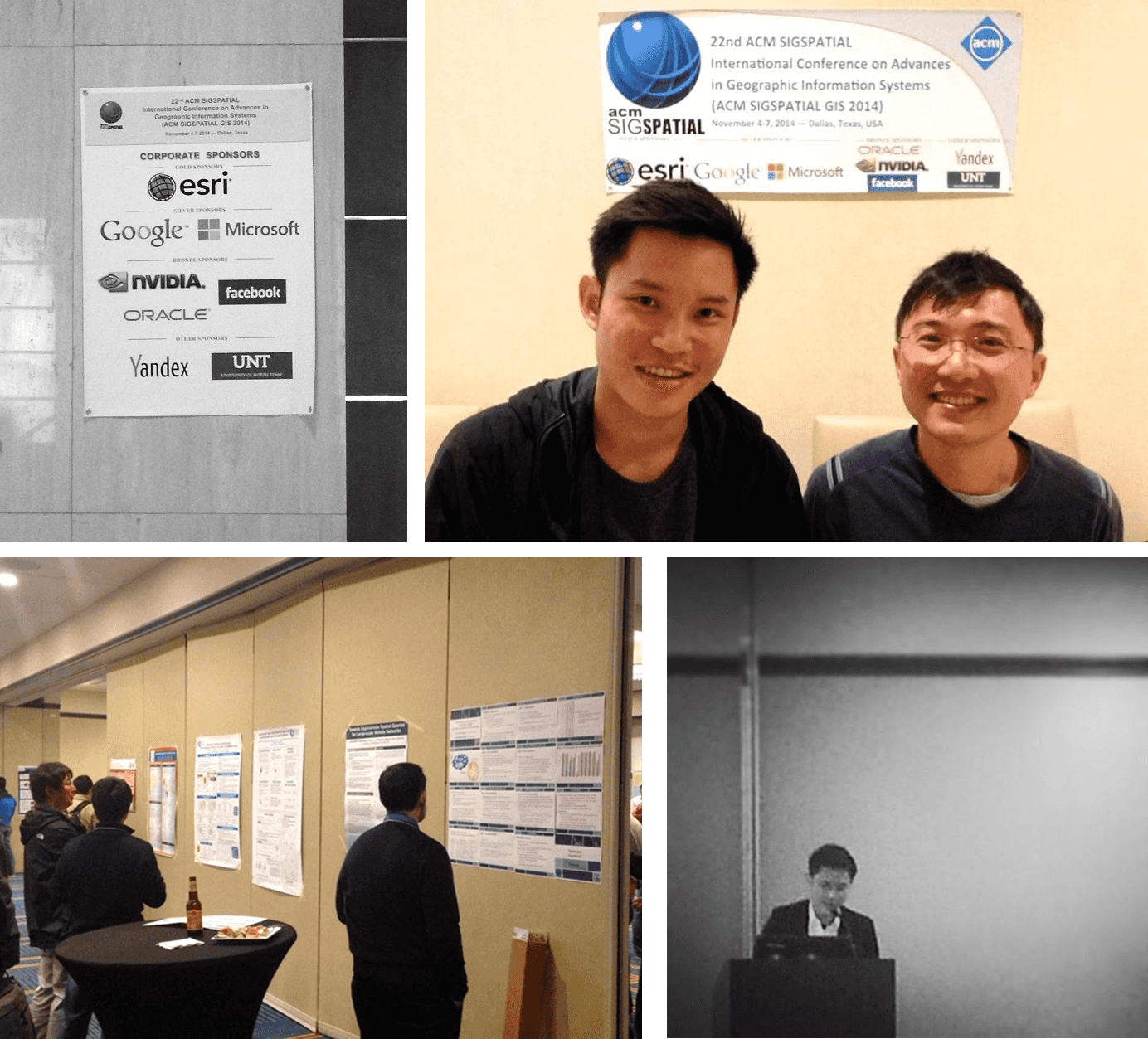
But what made this moment truly pivotal wasn’t just the academic achievement.
It was the fact that, for the first time in my life, I was traveling solo.
At 26 years old, I found myself packing my bags, heading overseas to present my research in front of an international audience. No team, no classmates—just me, standing in front of experienced researchers, defending my work.
It was a trial by fire, but one that changed me. 🔥
I learned how to own my ideas, articulate complex concepts, and most importantly, step outside my comfort zone.
When I look back to this experience, I knew this was the catalyst that shaped how I handled public speaking, stakeholder management, and leadership in the years that followed.
(P.S. I'll probably write a separate blog post talking about this trip!)
2. The Blockchain Rollercoaster: PAL Network
One of the biggest curveballs in my career? Joining PAL Network.
On the surface, it sounded like a natural extension of PolicyPal (where I was still working at), but in reality, it was the total opposite.
Unlike PolicyPal, which was regulated and structured, PAL Network was chaos—a blockchain startup in the wild, wild west of Web3.
And I mean that in the best way possible!
But we weren’t just a blockchain company that launched tokens on existing blockchains like Ethereum...
Because our vision entailed storing private financial assets, we had to build our own private blockchain—which meant forking Ethereum, tearing apart transaction pools, messing with gas fees, and wrapping our heads around proof-of-work and proof-of-stake consensus mechanisms.
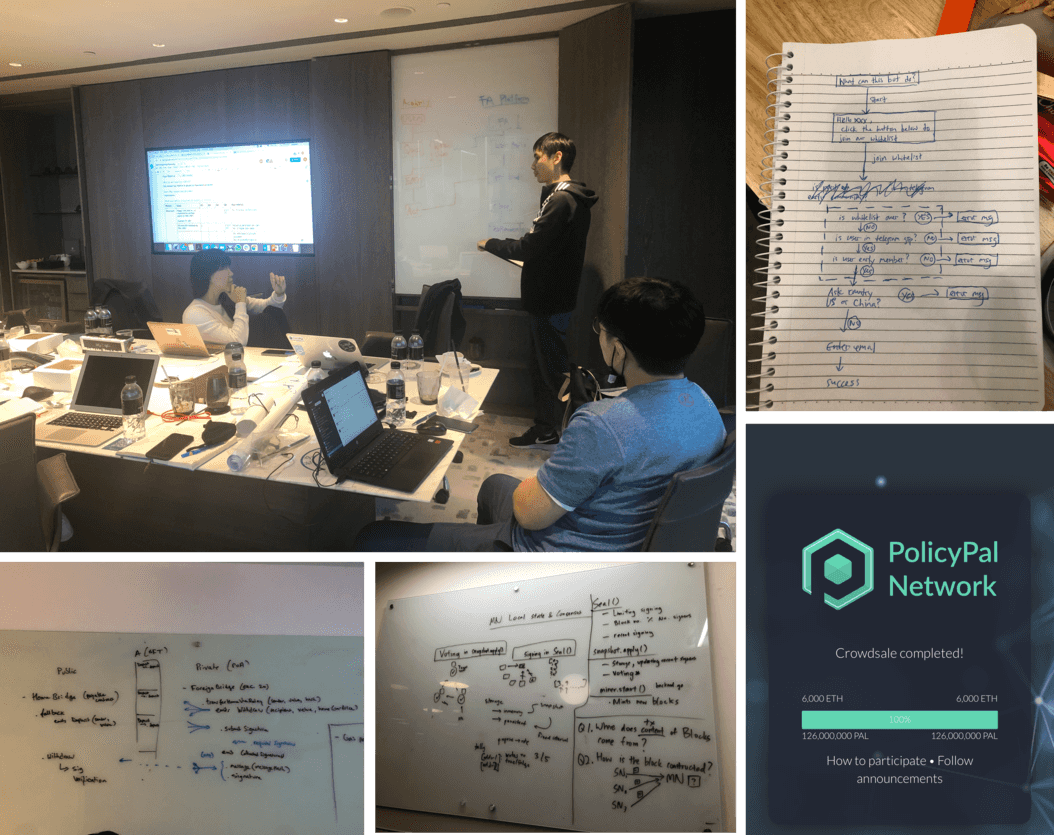
And that was before we even started executing our actual product vision.
On top of that?
No community. No playbook. No safety net.
So we built everything from scratch—the tech, the ecosystem, the people.
Believe it or not, we eventually came through.
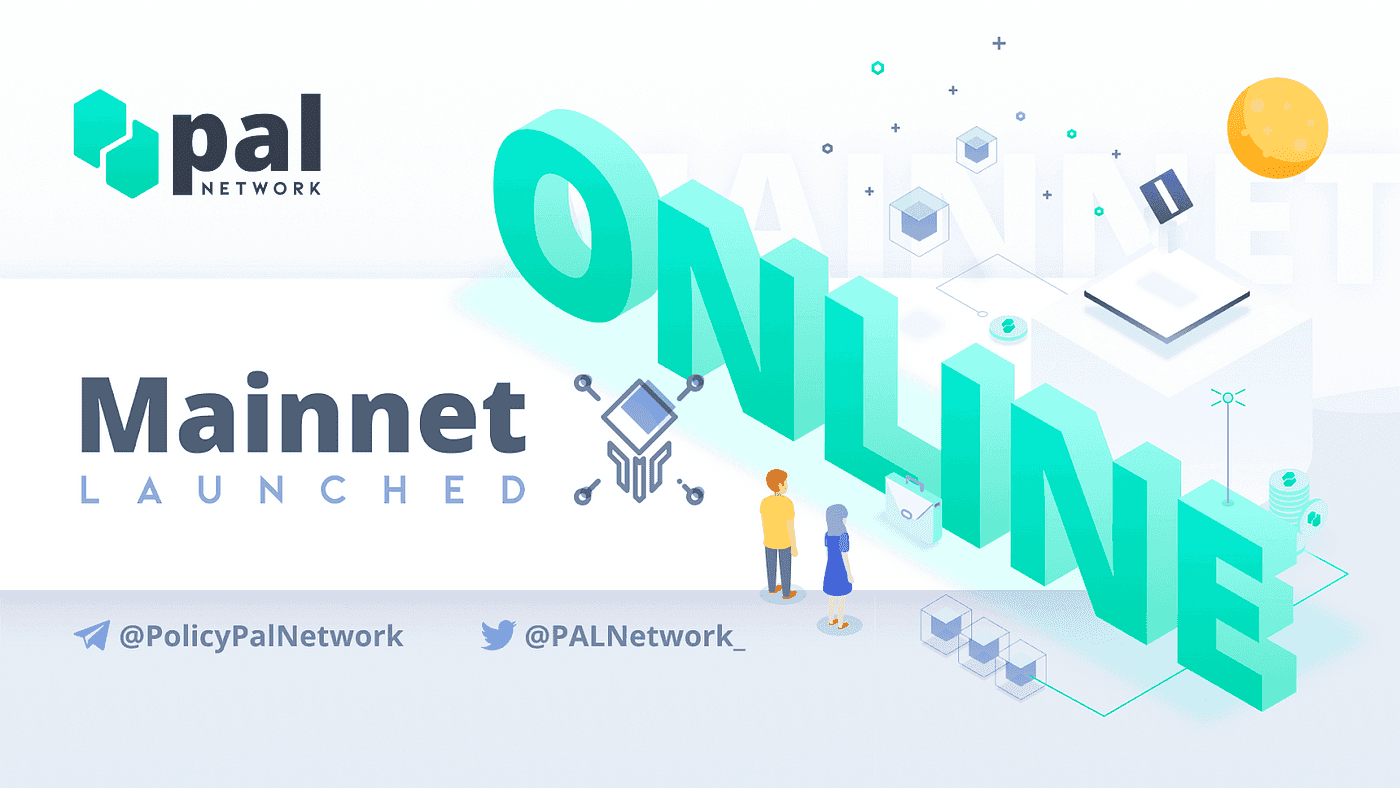
We launched a dual-layered protocol for financial assets, got our testnet up, then our mainnet, and eventually rolled out micro-insurance products like:
ScreenPAL – Phone screen damage protection
RidePAL – Ride-hailing expense coverage on rainy days
Earthquake Protect – Daily coverage for those in earthquake-prone regions
FlightPAL – Automated flight delay/cancellation claims
It was a wild time. We even got featured on Hackernoon. But then the crypto bear market hit—hard.
What was supposed to be a five-year runway turned into less than two years. The company had no choice but to shut down.
Brutal?
Yes. But I walked away with invaluable lessons:
Deep blockchain expertise (not just the hype but real, ground-up understanding)
Building a decentralised system with public/private layers
Masternodes and Supernodes staking (aka: designing incentive and reward systems for millions of users)
Community-building from scratch (airdrops, giveaways, hackathons—I even flew to Huobi’s Blockchain Conference in Ho Chi Minh!)

This was the moment that changed me.
PAL Network bridged me from being just a technical contributor to someone who could build, lead, and strategise.
But before I go to the next section, I have to acknowledge something truly special—the team.
PAL Network brought together some of the most talented individuals I’ve ever worked with, from developers and marketers to product strategists, all coming from different corners of the world.

The mix of diverse backgrounds and experiences created an environment where ideas flowed freely, and every challenge felt like a collective effort. We learned from each other, pushed boundaries, and built something truly ambitious.
Collaboration was at the heart of everything we built.
3. The PolicyPal & ValueChampion Hustle
Fresh off the blockchain high, I went full throttle at PolicyPal and ValueChampion.
After PolicyPal got acquired, the next three years were a pressure cooker.
Founders left. Senior management left. Interns left.
I stayed.

If the previous years had taught me technical depth, these years taught me resilience. I had to figure out how to manage stakeholders, speak up in meetings, and navigate the corporate jungle to get buy-in from the right people.
Not exactly what a Tech Lead signs up for, right? But that was the reality.
Definition of a technical lead — or tech lead for short — oversees the technical aspects of a software team by making architectural and design decisions
Then, at ValueChampion, I tackled one of the biggest technical challenges of my career:
Migrating a decade-old Drupal-based financial publications platform… with zero downtime.
Sounds straightforward but it actually wasn’t.
The challenge was not the technical aspect, it was the constraints I had to work with:
No budget.
No extra headcount.
No prior Drupal experience (seriously, who still uses it?).
It was just me and one other engineer, figuring things out on the fly while keeping the website alive.
Miraculously, we pulled it off 3 months later, but not without late nights and losing much of my hair.

That eventually saved the company $300,000 in costs.
Looking back, it’s one of the hardest things I’ve ever done, second only to the blockchain work.
But it proved that with the right mindset (and a lot of caffeine), the impossible can be done.
4. The Unexpected Educator: Teaching FinTech
After all that, something unexpected happened: I became a teacher.
Not in the traditional sense, but I had the rare opportunity to teach FinTech at SMU Academy (under TechFin Global)—all while still working at PolicyPal.
At first, it felt weird. Going from an engineer and builder to an educator.
But something interesting happened.
That teaching experience, forced me to refine the way I explained complex ideas, and before I knew it, those skills started seeping into my work at PolicyPal.
My daily standups became sharper, my ability to communicate with stakeholders improved, and I found myself speaking with more confidence when engaging with partners.
Teaching wasn’t just about sharing knowledge; it was changing how I led and collaborated in my own job.
It’s one thing to build products, but it’s another to shape people who will go on to build their own.
And that’s been one of the most fulfilling pivots of my career.
What’s Next?
So here I am now.
Looking back, I see a career shaped by tech, risk-taking, and breaking out of comfort zones.
I don’t follow traditional career norms. I push boundaries (creatively and carefully of course).
I build. I experiment.
And now? I want to create something even bigger. I don’t know exactly what that looks like yet.
But if the past has shown me anything…
I’ll build it.
And it will be worth it.
